This article was written by a human.
Throughout my nêhiyawêwin (Plains Cree Y-dialect) language journey I've found myself multiple times at my desk with a language dictionary, several books, references, websites and even chats open because I had encountered a new word, phrase or usage that I didn't quite understand and wanted to get to the bottom of.
Maybe it was a verb form I didn't understand at the time (like the X-actor transitive inanimate verb form ê-itamihk "it is said [about something]") or a particular turn of phrases -- particle phrases like ahpô piko "even if/and yet" can be tricky to learn because the words together can have a slightly different meaning then when they're uttered individually - ahpô "or, either" piko "only, must".
I call this technical process "rabbit-holing", a highly technical term, I know.
Being in software, the concept of a database is nothing new, really. But wouldn't it be helpful if every time you found a cool word or verb form you could go and look up different places where it was used, or maybe how it's pronounced properly in-context?
The Language Database
The Language Database is really just a searchable system of words that we've encountered during the process of transcribing.
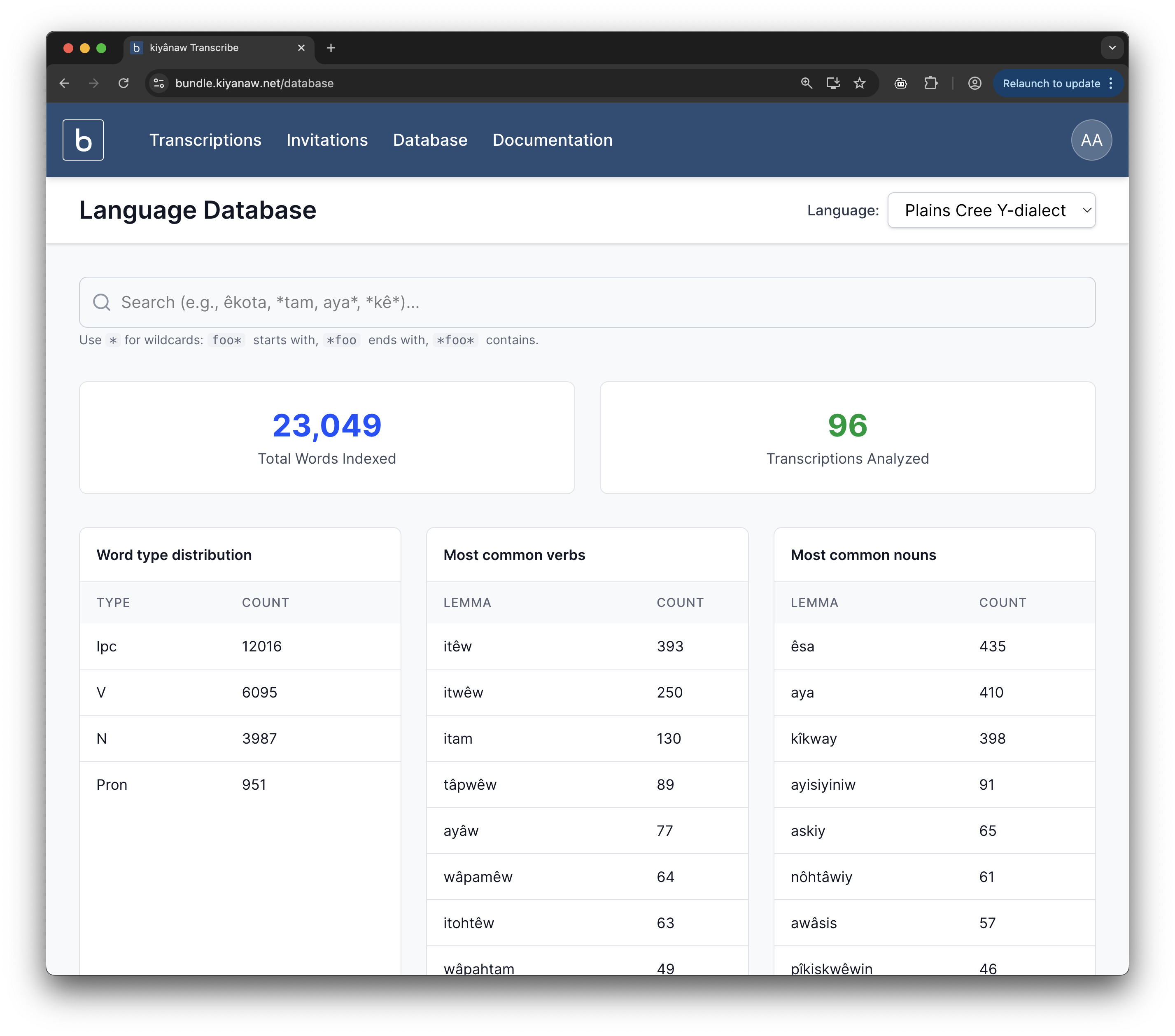
While the final design is still emerging, right now the idea is that for a given language where transcriptions have been created we can explore and search for various word forms of a language, grouped around the verb or noun. Once we've clicked into a word, we can see all of the "attested forms" (the form of the word we encountered within the transcription) and then go and listen to those back within the original transcription(s).
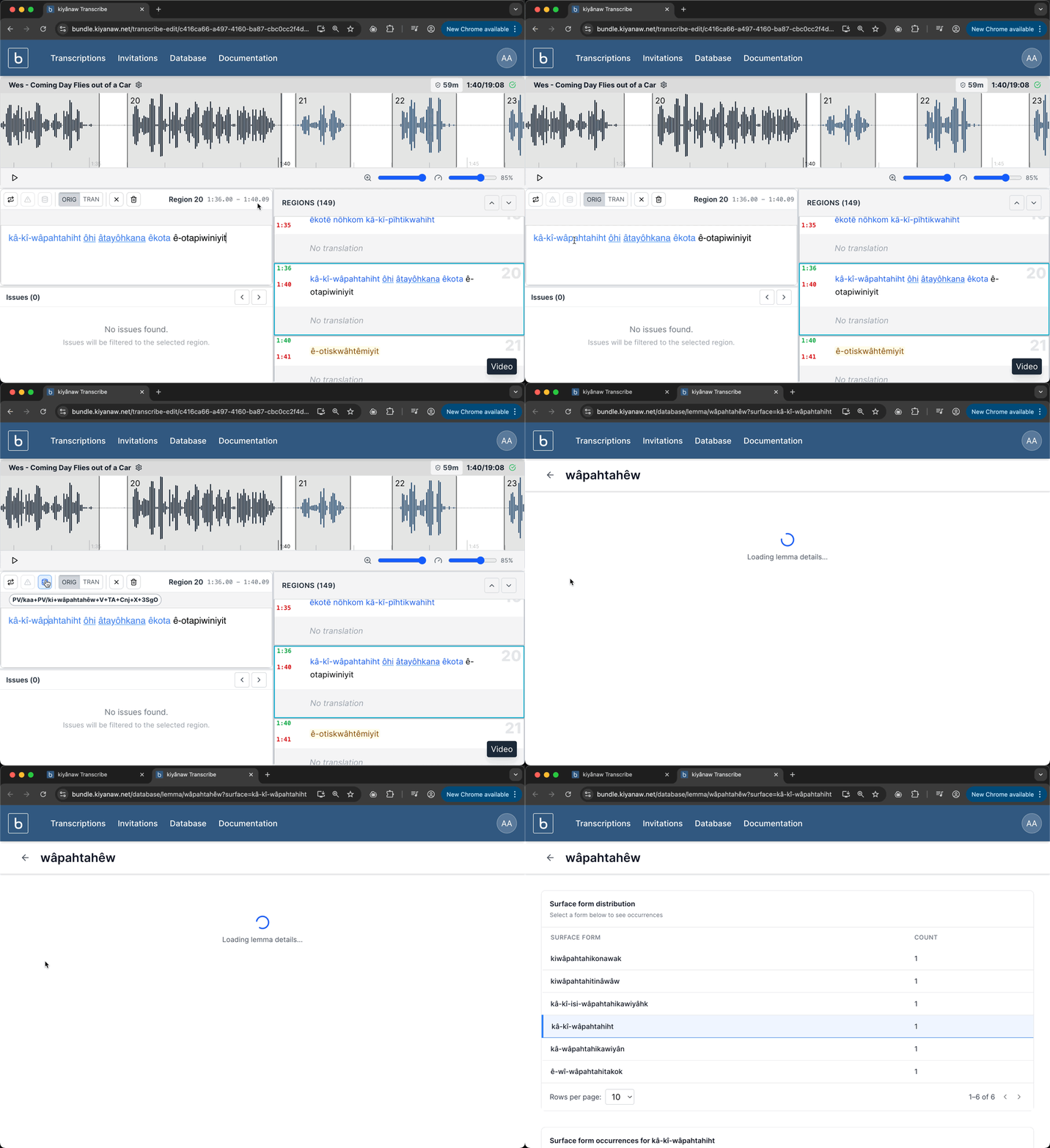
Another feature that we've added to Transcribe is when a word has been analyzed by the spell-checker (or FST rather) then when the user places their cursor within the word in the transcription editor a little "database" icon will light up in the button bar. This button will take the user to that particular word in the database.
We definitely have more features planned for the future, including incorporating content from other websites or sources, but we'll let this run for now and see how people use it. As always if you have any suggestions, feel free to reach out
Find more in the Language Database docs.
 kiyânaw